

Motorcycle Riding Schools in Italy for Track Riders
- Muturi Malta
- Jul 19
- 6 min read
Italy has roads that belong on every rider’s wish list, but its racetracks tell a different story. At a circuit, there are no blind corners, delivery vans, gravel patches, or pressure to keep up with traffic. There is simply the next braking marker, the next turn-in point, and more room to understand what your motorcycle can do.
A motorcycle riding school Italy experience is a smart way to make that first circuit day feel exciting rather than overwhelming. Whether you are traveling from the US, live nearby, or are already planning a European riding trip, structured tuition turns a trackday from a big unknown into a clear, supported challenge.
What a Motorcycle Riding School in Italy Really Offers
A riding school is not just a faster version of a road ride. It is a controlled learning environment built around technique, safety, and repeatable progress. You ride in a defined group, follow circuit rules, receive guidance from experienced instructors, and have the space to work on one skill at a time.
For a first-timer, that might mean learning the flags, finding a relaxed body position, and looking through the corner instead of at the pavement in front of your wheel. For an experienced road rider, the focus may shift to braking consistency, smoother throttle application, and using reference points around the circuit. Faster riders can work on line choice, braking efficiency, and the small adjustments that make laps feel calmer as speed increases.
The best school format meets you where you are. You should not need race experience, a fully built track bike, or a garage full of equipment to belong there. You need a valid motorcycle license, the right protective gear, a willingness to listen, and a sensible approach to your own pace.
Why Italy Is Made for Circuit Learning
Italy’s racing culture is part of the attraction, but the practical advantages matter just as much. The country is home to legendary circuits, well-established motorcycle communities, and a deep appreciation for performance machinery. A school day here can become the centerpiece of a vacation that also includes great food, memorable scenery, and time in cities or coastal towns.
More importantly, a circuit gives you consistency. The pavement follows the same route every lap. Corner direction, surface changes, braking zones, and marshal positions are known. That consistency allows you to build skill quickly because you are not constantly reacting to unpredictable road conditions.
It also creates a better environment for discovering your limits responsibly. This does not mean treating the day like a race. It means learning how a motorcycle responds when you brake with purpose, lean with commitment, and accelerate with patience. Speed is a result of better technique, not the only goal.
Choose the Right Starting Point
Not every rider needs the same format. A novice who has never entered a pit lane benefits most from a first-timer trackday with dedicated coaching. You will want a clear briefing, manageable session groups, instructors who communicate without ego, and time to ask basic questions. There is nothing basic about preparing correctly.
If you have done a few trackdays, a focused coaching course can be the better choice. Rather than simply riding more laps, you can identify the habit holding you back. It may be rushing corner entry, tightening your arms, releasing the brakes too abruptly, or looking at the rider ahead instead of using your own visual markers.
For riders coming from the US or flying into Italy, motorcycle rental can make the whole experience dramatically easier. Bringing your own bike across the Atlantic involves cost, logistics, and time. Renting a track-prepared motorcycle lets you arrive with less stress and spend more energy on the reason you came to Italy: riding.
A rental is also a good option if you are curious about a particular machine. A lightweight sport bike can be an excellent training tool because it rewards corner speed, clean lines, and momentum. A larger superbike offers serious capability, but it can demand more discipline with throttle control and braking. The right choice depends on your experience, confidence, physical comfort, and learning goals - not just horsepower.
What Your First Trackday Will Feel Like
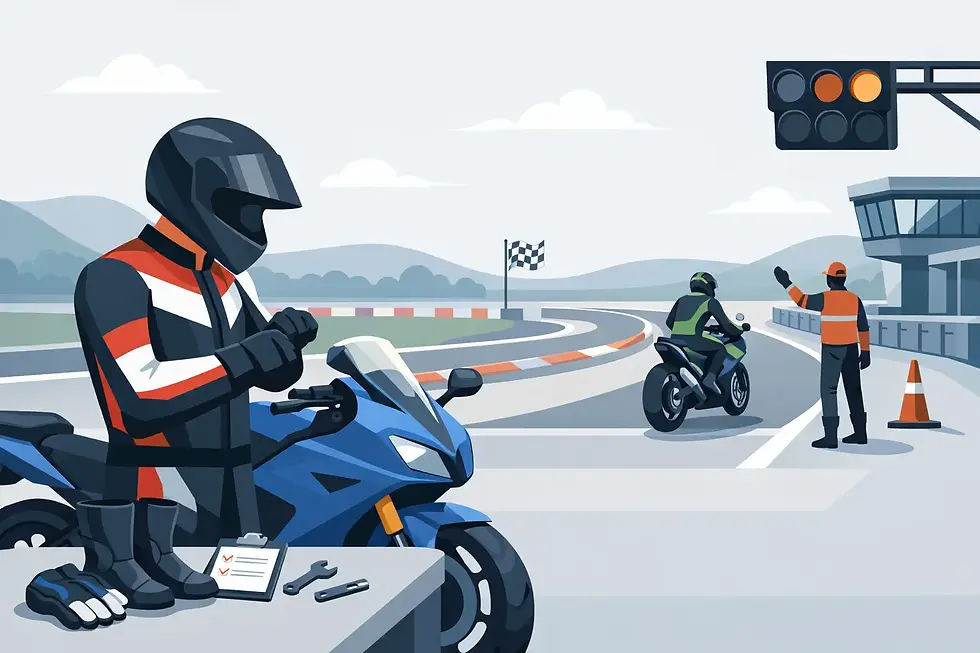
The morning usually begins before the engines start. You will check in, sign on, attend a rider briefing, and prepare your gear and motorcycle. This is where you learn the practical language of the day: pit-lane procedures, group sessions, passing rules, and flag signals.
Flags matter. A yellow flag means caution and no passing. A red flag means the session has stopped. A checkered flag marks the end of the session. Treat these signals seriously. They are what allow a busy track to remain organized and enjoyable for riders at different levels.
Your first sessions may feel intense, even if the pace is controlled. The track is wider than the road, the corners can arrive faster than expected, and you may initially struggle to remember the layout. That is normal. Do not chase lap times or try to copy the quickest rider in your group. Use the early laps to learn where the circuit goes and where your eyes should be.
Between sessions, coaching becomes valuable. An instructor can watch your body position, line, braking timing, and vision habits from a perspective you cannot have while riding. One useful correction can change the entire feel of a corner. Keep notes after each session, drink water, and choose one priority for the next outing instead of attempting to fix everything at once.
Gear, Fitness, and the Details That Make the Day Easier
Track riding is more physical than many riders expect. You do not need athlete-level fitness, but you do need to stay hydrated, alert, and loose on the motorcycle. Tension burns energy and makes steering inputs less precise. Sleep well the night before, eat a proper breakfast, and avoid arriving already exhausted from a long drive or late flight.
Most circuit events require a full-face helmet, one-piece or zip-together leather suit, gloves, and high motorcycle boots. Back and chest protection may also be required or strongly recommended. Check the specific event requirements before you travel, especially if you are renting gear or packing from overseas. A helmet that is legal for road use is not automatically accepted at every track event.
Bring a spare visor if possible, along with earplugs, water, snacks, sunscreen, and a light layer for the paddock. Italian weather can be beautifully warm, but conditions change. If rain arrives, do not assume the day is ruined. Wet riding instruction can teach smoothness, patience, and precise control. Still, if this is your very first experience, it is reasonable to adjust your goals and focus on learning rather than pace.
How to Get More From Tuition
Good coaching is a conversation, not a lecture delivered from the pit wall. Tell your instructor what feels difficult. Maybe fast left-hand corners make you hesitate. Maybe you are unsure how hard to brake. Maybe you are comfortable at speed but lose confidence when passing begins. Honest feedback helps the coach give you advice that fits your riding.
Be ready to hear that the answer is sometimes slower. A rider who enters a corner too quickly may spend the entire turn correcting their line and waiting to accelerate. Braking a little earlier, turning once, and picking up the throttle sooner can feel more controlled and often produces a faster exit.
Video can help, but it should not replace direct feedback. Footage is useful for reviewing lines and body position after the session. It is less useful if you spend every lap thinking about the camera. First, ride the bike. Then use the information to refine what you felt.
Booking a Motorcycle Riding School Italy Experience
The easiest route is to choose an event built for your current level, then decide whether you need tuition, a rental motorcycle, or both. Book early when you can, particularly for popular circuits and premium motorcycles. This gives you time to confirm gear rules, travel plans, license requirements, insurance details, and any technical requirements for your own bike.
RideTrackBook is designed to simplify that path, from first-timer support and course booking to motorcycle rental and organized circuit access. The goal is not to make track riding feel exclusive. It is to remove the practical barriers that stop capable riders from trying it.
Your first day on an Italian circuit does not need to be perfect. It only needs to be prepared, respectful, and open to learning. Start with the right support, give yourself permission to build pace gradually, and let each clean corner be the reason you want to come back.


Comments